
MIGUEL AND LOWE NAMED COBELL’S INAUGURAL HONORARY FELLOWS
8/28/2024
FOR IMMEDIATE RELEASE
Contact: John Garland, PhD, Director of Research and Scholar Success, The Cobell Scholarship Program Administered by Indigenous Education, Inc.
(505) 313 – 0032
MIGUEL AND LOWE NAMED COBELL’S INAUGURAL HONORARY FELLOWS
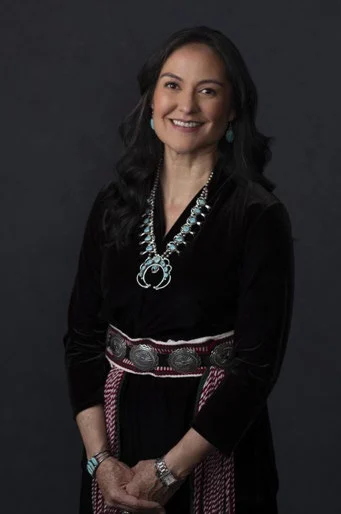
Shelly C. Lowe, Chair, National Endowment for the Humanities
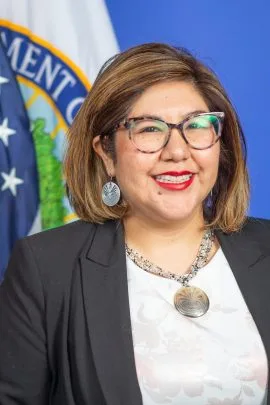
Naomi Miguel, Executive Director, White House Initiative on Advancing Education Equity, Excellence, and Economic Opportunity for Native Americans and Strengthening Tribal Colleges and Universities
Albuquerque, NM, August 28, 2024 - Indigenous Education, Inc. (IEI) proudly announces the 2024 Honorary Cobell Fellows. The Cobell Scholarship Program, one of the nation’s largest scholarship providers for American Indians and Alaska Natives, has introduced its inaugural honorary members to the Cobell Fellowship Program. The first Honorary Cobell Fellows are Shelly Lowe (Navajo Nation) and Naomi Miguel (Tohono O’odham Nation). This new honor was celebrated during the Inaugural Dissertation Writing-Year Fellowship Symposium held at the Heard Museum in Phoenix.
Naomi Miguel, Ba’ag Nei’dam O’ks (Eagle Singing Woman), a citizen of the Tohono O’odham Nation and Executive Director of the White House Initiative for Native Americans and Strengthening Tribal Colleges and Universities, along with Shelly C. Lowe, a citizen of the Navajo Nation and Chair of the National Endowment for the Humanities, were recognized as two of the most significant leading voices in advancing Indigenous students' access to and success in higher education.
The Cobell Honorary Fellowship Program seeks to identify and celebrate Indigenous leaders who demonstrate exceptional dedication to advancing Indigenous student success and who embody the extraordinary leadership of Elouise Cobell, the namesake of the Cobell Scholarship Program. Both Miguel and Lowe, through their roles in the Biden-Harris Administration and throughout their careers, have led crucial initiatives and fostered sustainable, positive change for students across Indian Country.
In naming Lowe and Miguel as the first Honorary Fellows, Melvin E. Monette, CEO of Indigenous Education Inc. and Administrator of the Cobell Scholarship Program, remarked, “Honorary Fellows Lowe and Miguel work tirelessly every day to elevate Native voices and demand equitable outcomes for our people, continuing the spirit of Elouise Cobell’s lifelong work. Their ongoing advocacy will serve our scholars for decades to come, and we are proud to welcome them into the Cobell Fellow Family.”
The new Cobell Honorary Fellowship Program is celebrated alongside the newly established Cobell Dissertation Writing-Year Fellowship Program, approved by the Cobell Board of Trustees. This nationally recognized program brings together leading American Indian and Alaska Native scholars from diverse academic fields in their final year of doctoral research and aims to build a community of Indigenous scholars who support each other during the most challenging stages of their doctoral careers. The inaugural cohort of the Elouise Cobell Dissertation Writing-Year Fellowship Program, awarded for the 2024-2025 academic year, was also celebrated at the Phoenix Symposium.
Each year, ten Fellows are selected for the Fellowship, which begins with a week-long, in-person symposium that provides professional support in community-building, leadership development, and professional growth, with guidance from some of the nation’s leading faculty and experts. Following the Symposium, Fellows receive regular academic and individual coaching and participate in monthly virtual sharing circles with their cohort for 12 months. The overall goal is to ensure that Fellows have the community support they need during this crucial phase of their doctoral experience. Fellows and Honorary Fellows will have lifetime access to Cobell’s resources through the Cobell Community scholar engagement platform, as well as future programming and outreach events designed to connect them with leaders and organizations dedicated to creating positive long-term change for Indian Country and beyond.
Naomi Miguel Bio
Naomi Miguel, Ba’ag Nei’dam O’ks (Eagle Singing Woman), is a citizen of the Tohono O’odham Nation and serves as the Executive Director for the White House Initiative on Advancing Education Equity, Excellence, and Economic Opportunity for Native Americans and Strengthening Tribal Colleges and Universities.
Ms. Miguel previously served as the Staff Director for the Subcommittee for Indigenous Peoples of the United States on the House of Representatives Natural Resources Committee. She was a founding board member of the Congressional Native Staff Association and is a former Native American Congressional Intern for the Udall Foundation. Before her government service, Ms. Miguel worked in the nonprofit sector at the Tribal Law and Policy Institute, where she is now a board member. Ms. Miguel earned her Bachelor of Arts in Political Science with minors in pre-law and art from Mount St. Mary’s University, an all-women’s college in Los Angeles, CA. She received her Master’s in Public Administration and Policy from American University in Washington, D.C.
Ms. Miguel is a recipient of Mount St. Mary’s University’s Alumni Association ‘Rising Star’ award and the National Center’s 2021 Native Americans 40 Under 40 award. Her work in education has been featured in American University’s magazine and USA Today’s Native American Heritage Month magazine. A proud rez kid from the Tohono O’odham Nation in Arizona, she enjoys hiking, drawing, spending time with family and friends, and playing her alto saxophone.
Shelly C. Lowe Bio
Shelly C. Lowe is the Chair of the National Endowment for the Humanities. A citizen of the Navajo Nation, she grew up on the Navajo Reservation in Ganado, Arizona. From 2015 to 2022, she served as a member of the National Council on the Humanities, the 26-member advisory body to NEH, an appointment she received from President Obama.
Lowe’s career in higher education has included roles as Executive Director of the Harvard University Native American Program, Assistant Dean in the Yale College Dean’s Office, and Director of the Native American Cultural Center at Yale University. Prior to these positions, she spent six years as the Graduate Education Program Facilitator for the American Indian Studies Programs at the University of Arizona.
Lowe has held various national leadership roles, most recently as a member of the University of Arizona Alumni Association Governing Board and the Challenge Leadership Group for the MIT Solve Indigenous Communities Fellowship. She has also served on the board of the National Indian Education Association and as a trustee on the board of the National Museum of the American Indian.
Lowe holds a Bachelor of Arts in Sociology, a Master of Arts in American Indian Studies, and has completed doctoral coursework in Higher Education from the University of Arizona.
Photo Credits
Photo of Shelly C. Lowe – National Endowment for the Humanities
Photo of Naomi Miguel – U.S. Department of Education
About Cobell Scholarship Program, Indigenous Education, Inc.
Created in 2016 to administer the Cobell Scholarship Program, Indigenous Education, Inc. provides elevated opportunities for Native college students by empowering them with an impactful scholarship experience designed to support their success in higher education. The mission and vision of Indigenous Education, Inc. is to support American Indian and Alaska Native student success. Since its inception, the program has supported over 5,200 students with more than $50 million in scholarships. Additionally, the Cobell Fellowship Program supports American Indian and Alaska Native graduate students in their research and dissertation writing. To learn more about IEI and the Cobell Scholarship, visit cobellscholar.org.
-END-