
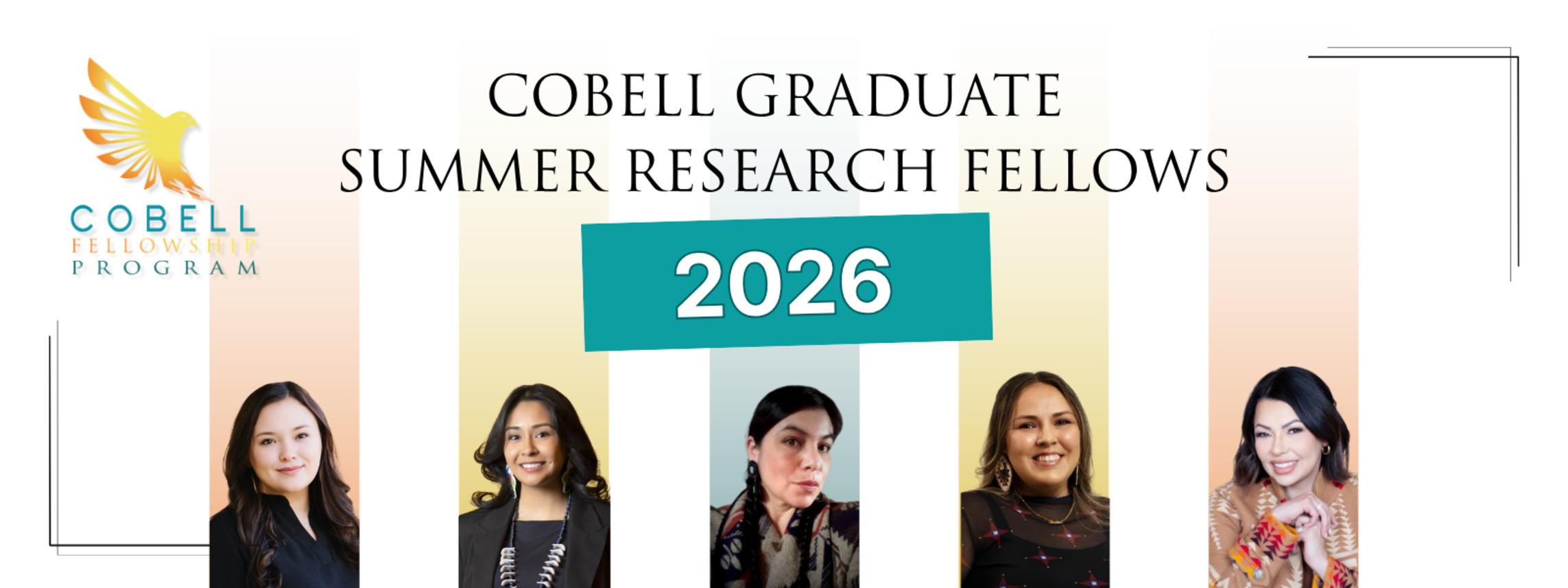
2026 Cobell Graduate Summer Research Fellowship Recipients Announced
Albuquerque, NM, May 7, 2026 – The Cobell Scholarship Program announces the 2026 recipients of the distinguished Cobell Graduate Summer Research Fellowship administered on behalf of the Cobell Board of Trustees.
Five fellows from a highly competitive pool of over 100 graduate applicants were selected for the 2026 Summer Research Fellowship cohort, each receiving $5,000. “As we celebrate ten years of service to Native Scholars and Fellows, it has been an honor to support 50 Native researchers to cross the finish line. Reading the biographies of these five individuals is an inspiration for others to 'question everything that comes before them' as Elouise reminded us to do," said Melvin Monette-Barajas, CEO of IEI.
The fellowship supports high-achieving student researchers who might not otherwise have access to funds for research and related activities during summer months. Research fellows receive a $5,000 stipend to offset remaining costs associated with their final research projects. During the Fellowship period, scholars receive direct guidance from their faculty research advisor and support from Cobell’s staff. Cobell Summer Research Fellows enjoy opportunities to network with other Fellows across the world and engage in future Fellowship activities as new cohorts are selected. “Our Summer Research Fellows always bring an extraordinary level of intelligence, energy, and purpose to their research, and this year is no exception. We could not be prouder to welcome this remarkable group of scholars to the Cobell Fellowship family,” added Director of Research and Scholar Success, Dr. John Garland.
Continue reading to learn more about the 2026 Cobell Graduate Summer Research Fellows. Applications for our next cohort of 2027 Cobell Summer Graduate Research Fellows open on September 1, 2026.
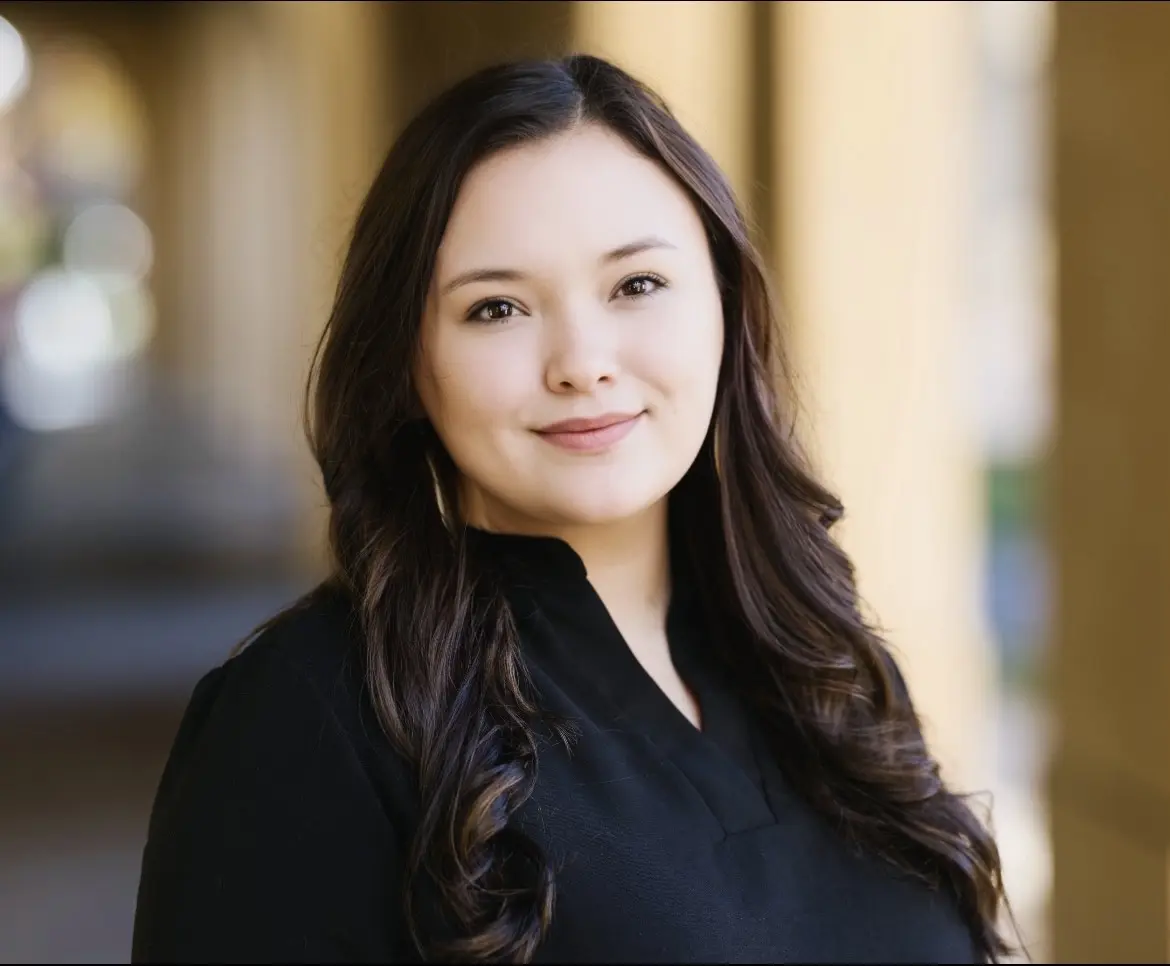 Cobell Fellow: Constance Owl
Tribal Affiliation: Eastern Band of Cherokee Indians
Institution: University of Georgia
Degree: Doctor of Philosophy – History
Bio: Constance Owl, a citizen of the Eastern Band of Cherokee Indians, is a doctoral student at the University of Georgia studying Cherokee language and history as told through the Cherokee Phoenix newspaper. Constance attended Western Carolina University for her Master’s in History and Stanford University for her Bachelor of Native American Studies. She is currently a graduate assistant in the University of Georgia history department and has been named a Presidential Graduate Fellow since 2024. Over the last decade, Constance has played an active role in the revitalization of Indigenous history and has mentored both undergraduate and graduate students in Indigenizing archival collections and historical preservation.
Over the coming months, Owl will be working with Cherokee language specialists to translate the Cherokee content from the historic newspaper, constituting roughly 30% of the text. By translating the original Cherokee texts into English, Owl and her team will be able to preserve both the language and the history therein.
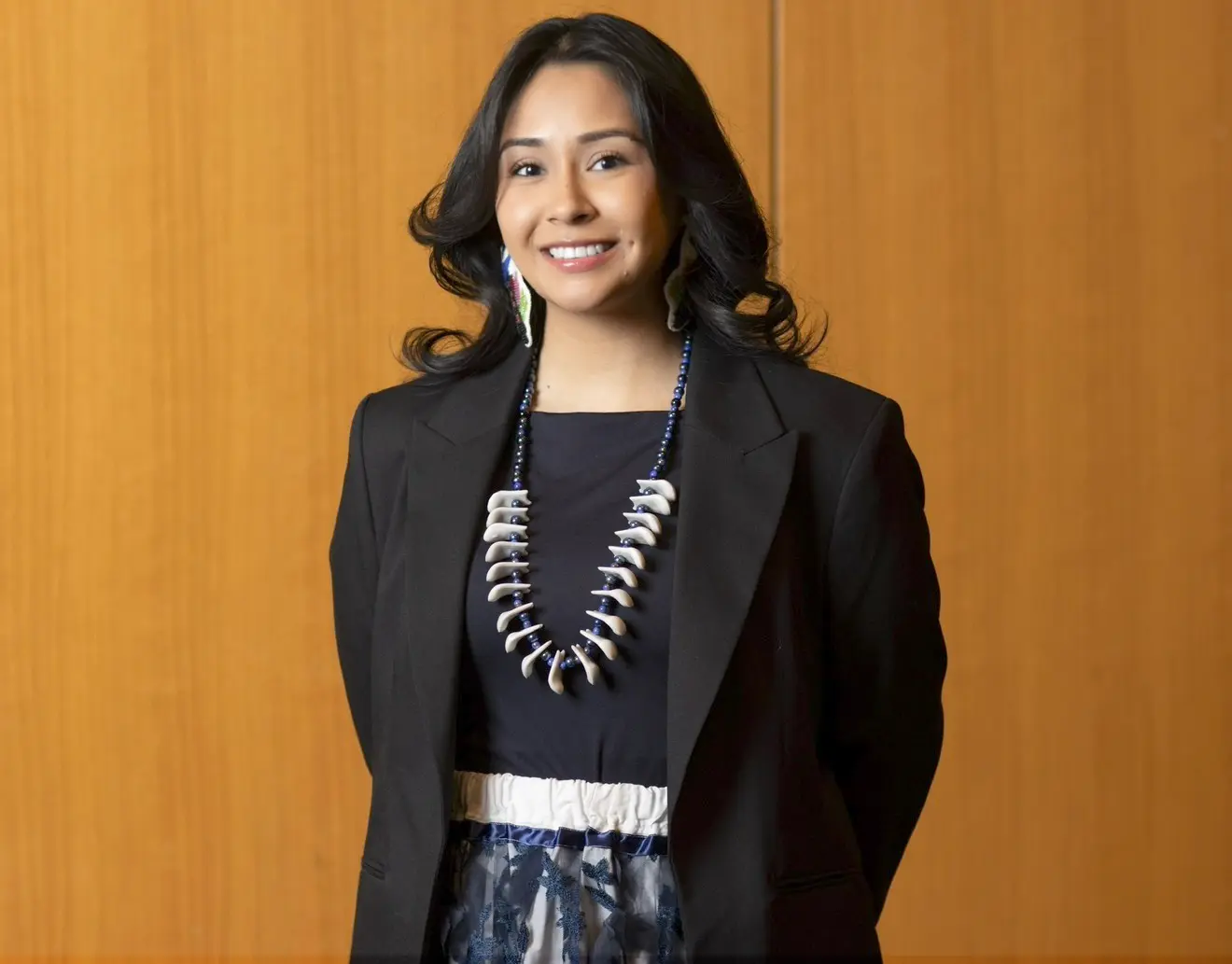 Cobell Fellow: Elena Rodriguez
Tribal Affiliation: Three Affiliated Tribes of the Fort Berthold Reservation
Institution: University of North Dakota
Degree: Master of Science – Geological/Geophysical Engineering
Bio: Elena Rodriguez is a citizen of the Three Affiliated Tribes of the Fort Berthold Reservation. Rodriguez is currently pursuing her Master of Science degree in Geological Engineering from the University of North Dakota after obtaining her Bachelor of Science degree in Environmental Science from Sitting Bull College two years prior. Elena is an engaged member of her community, as a member of the University of North Dakota Indigenous Association, an AISES member, and conducts research and workshops in her community surrounding water quality.
Elena’s research focuses on the Cannonball River Watershed in North Dakota and the availability of high-quality water in the area by analyzing snow water equivalent, soil moisture, rainfall, and streamflow. Rodriguez prides that “this project builds local knowledge, strengthens Tribal water stewardship, and helps the next generation see their role in protecting the lands and waters they call home.”
 Cobell Fellow: Kellie Asay
Tribal Affiliation: Cheyenne River Sioux Tribe
Institution: University of Utah
Degree: Doctor of Philosophy – Nursing Science
Bio: Kellie Asay is a doctoral student in Nursing Science at the University of Utah, specializing in accessible, informed, and culturally-conscious testing for Human Papillomavirus (HPV). A member of the Cheyenne River Sioux Tribe, Kellie seeks to explore the critical gap in clinical care and testing for Indigenous women in rural areas. With two degrees in Nursing (MS, Nursing from University of Arizona; BS, Nursing from Montana State University) and over a decade of nursing experience, Kellie is uniquely positioned to serve her community and advocate for increased preventative health care.
Through her research, Kellie will examine the “multilevel factors, individual, interpersonal, and structural, that shape rural, Indigenous women’s screening decisions.” Asay will explore the lived experiences of her participants in how cervical cancer prevention is presented, interpreted, and executed, paying close attention to the cultural and structural determinants surrounding decisions. Kellie views her research as “both a scientific and a social justice endeavor,” highlighting that “Rural and Indigenous communities often experience overlapping barriers to care, and interventions that respect cultural values and empower autonomy are essential for meaningful change.”
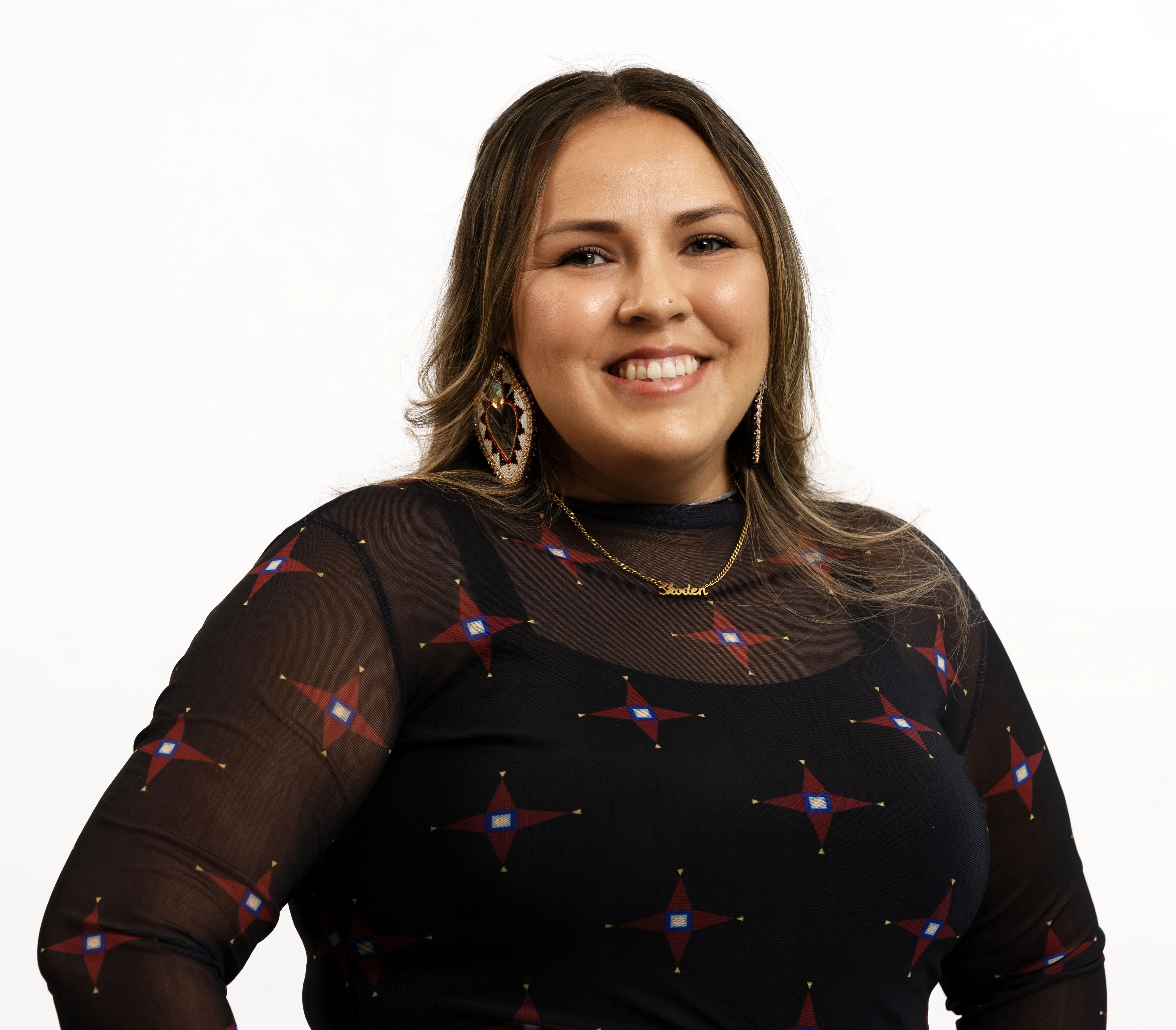 Cobell Fellow: Kelly Beym
Tribal Affiliation: Navajo Nation
Institution: University of Kansas
Degree: Doctor of Philosophy – Geography
Bio: Kelly Beym is a citizen of the Navajo Nation and is pursuing her doctorate in Geography and Indigenous Studies, focusing on the rematriation of cultural foodways and food systems. Kelly has a deep background in agriculture and Indigenous food sovereignty, which is the basis for her research.
Beym’s research will observe two existing modern cultural food systems in Northern Wisconsin – the Tribal Elder Food Box Program and the Food Distribution Program on Indian Reservations. Beym highlights these programs, emphasizing them as crucial community-based models of Food Sovereignty, re-emphasizing the Right to Food as a Treaty Right, and explores the “value of integration within nutrition assistance and food box programs.” She also hopes to address the importance of revitalizing traditional Indigenous food systems.
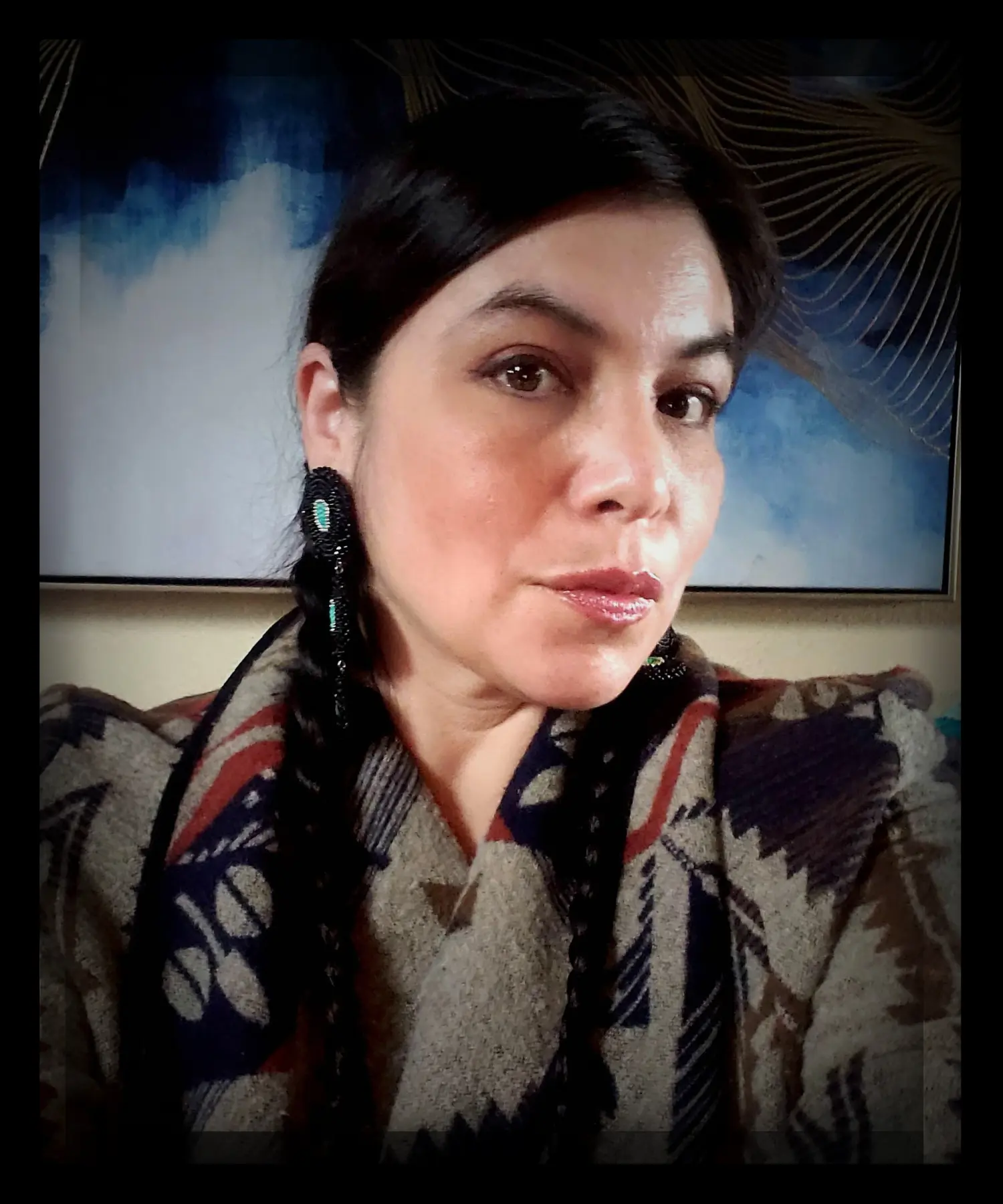 Cobell Fellow: Sarah Caligiuri-Stahmer
Tribal Affiliation: Yomba Shoshone Tribe
Institution: Lesley University
Degree: Doctor of Philosophy – Education
Bio: Sarah Caliguri-Stahmer is a doctoral student at Lesley University studying the educational opportunities of students living on the lands of the Yomba Shoshone Tribe, of which she is a citizen. Her background in Federal Indian Law, cultural studies and education, and community engagement culminates in her dissertation, currently titled “Developing an Educational Plan for the Yomba Shoshone Tribe: Preparing a Tribal Community for a Participatory Action Research Project.”
Caliguri-Stahmer’s work highlights the inequities faced by Yomba Shoshone Tribal members based on the inaccessibility of the nearest school, which is an hour's drive from the reservation. In her research, Sarah offers a glimpse into the educational microhistory of the Tribe, features current educational models offered by other Tribal communities, and conducts an educational needs assessment, concluding with a participatory action plan for the Yomba Shoshone Tribe to create a school on their land for their students. Sarah has indicated that her work “holds transformative potential, creating educational pathways that honor our sacred connection to land, knowledge, and collective healing.”
About the Cobell Scholarship Program
Created in 2016 for the express purpose to administer the Cobell Scholarship Program, Indigenous Education, Inc. provides elevated opportunities for Native college students through empowering them with an impactful scholarship experience designed to support their success in higher education. The overarching mission and vision of Indigenous Education, Inc. is to support American Indian and Alaska Native student success. Since the program’s beginning ten years ago, it has supported over 6,000 students with over $60,000,000 in scholarships. To learn more about IEI and the Cobell Scholarship, visit cobellscholar.org.
-END-