
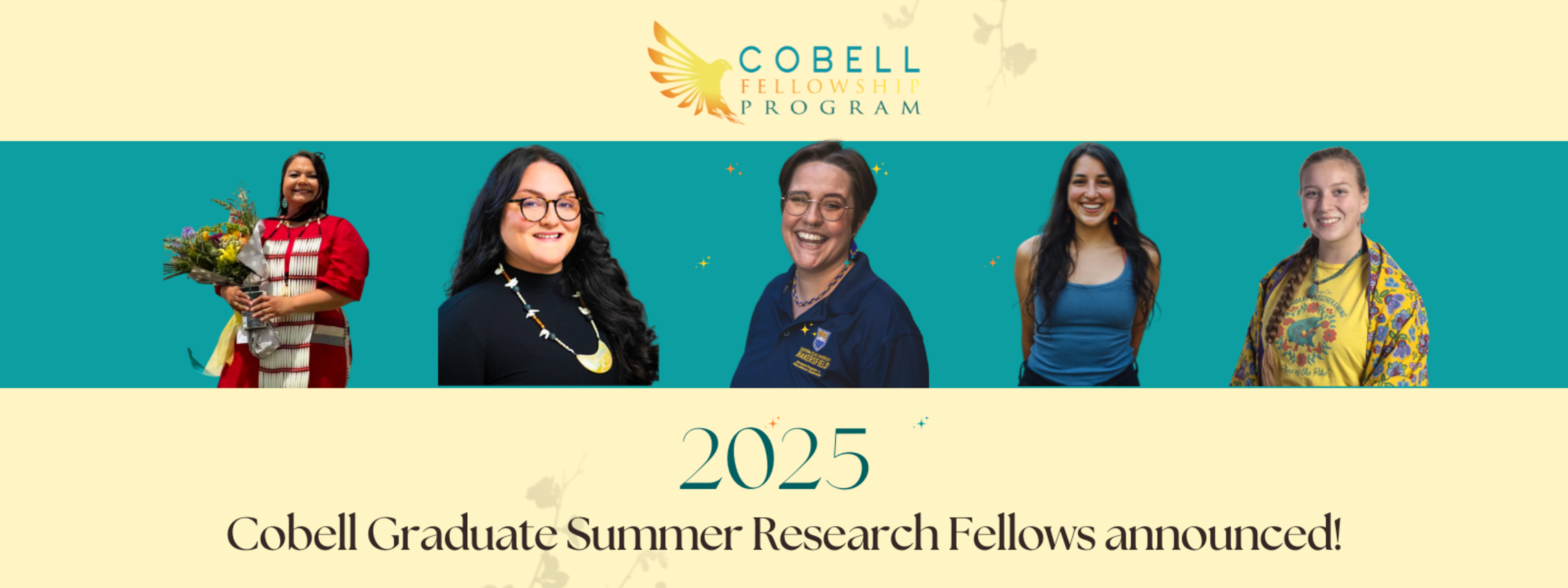
2025 Cobell Graduate Summer Research Fellows Announced
Published on May 29, 2025
Indigenous Education, Inc.(IEI) announces the 2025 recipients of the distinguished Cobell Graduate Summer Research Fellowship administered on behalf of the Cobell Board of Trustees.
Five fellows from a highly competitive pool of over 100 graduate applicants were selected for the ninth Summer Research Fellowship cohort, each receiving $5,000. “Every year, IEI looks forward to reviewing the applications. We recognize the students are in their final phases of their graduate programs and need support to cross the finish line. It’s such an honor and inspiration to witness their work and dedication,” said Melvin Monette-Barajas, CEO of IEI.
The fellowship supports high achieving student researchers who might not otherwise have access to funds for research and related activities during summer months. Research fellows receive a $5,000 stipend to offset remaining costs associated with their final research projects. During the Fellowship period, scholars receive direct guidance from their faculty research advisor and support from the Director of Research and Student Success at Indigenous Education, Inc. Cobell Summer Research Fellows enjoy opportunities to network with other Fellows across the world and engage in future Fellowship activities as new cohorts are selected. “We are excited to continue supporting Native scholars representing a variety of tribes and working to indigenize higher education in their respective academic fields,” added Monette-Barajas.
Continue reading to learn more about the 2025 Cobell Graduate Summer Research Fellows. Applications for our tenth cohort of 2026 Cobell Summer Graduate Research Fellows open on September 1, 2025.
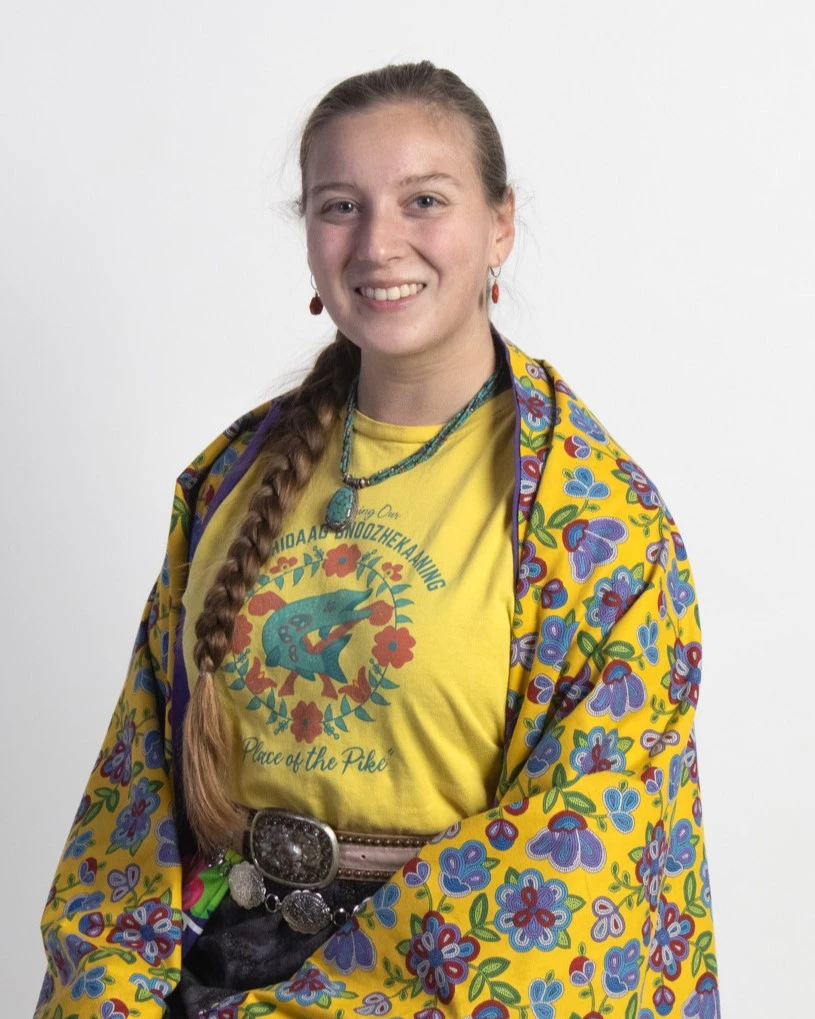 Angela Teeple
Bay Mills Indian Community
University of Minnesota Medical School
PhD – Health and Medical Physics
Angela M. Teeple is a PhD candidate in Medical Physics at the University of Minnesota Medical School, with a diverse academic background including a Master of Legal Studies in Indigenous People’s Law and Policy and a Bachelor of Science in Mechanical and Nuclear Engineering. She has extensive professional experience as a Nuclear Effects Analyst for the Air Force Nuclear Weapons Center, a Nuclear Reactor Engineer at Sandia National Laboratories, and a Nuclear Systems Engineer at SHINE Medical Technologies. Her research spans areas such as portable MRI development, tribal water testing, and PPE decontamination during COVID-19. Angela has published and presented on topics related to Indigenous communities, neuroimaging, and environmental health. She is recognized for her contributions with awards such as the AISES Most Promising Engineer and multiple Air Force Civilian of the Quarter honors. Her service includes leadership roles in organizations like AISES and AmeriCorps, and she is proficient in a wide range of technical tools and programming languages.
Angela’s dissertation titled "Development of Portable, Mid-Field MRI Technology" aims to revolutionize magnetic resonance imaging (MRI) by creating a portable, mid-field (0.7 Tesla) system that is affordable, compact, and accessible to underserved populations globally. Traditional MRI systems are hindered by high costs, large sizes, and extensive infrastructure needs, limiting access to quality imaging in remote and resource-limited areas. This project seeks to overcome these barriers by innovating new imaging techniques and hardware designs, enabling point-of-care and bedside MRI diagnostics.
Key objectives include redesigning MRI spatial encoding using Frequency-modulated Rabi-Encoded Echoes (FREE), which eliminates the need for pulsed magnetic field gradients and uses spatially varying radiofrequency (RF) fields. This approach simplifies hardware, reduces costs by 30%, and allows operation in nonuniform magnetic fields. Additionally, the project will develop a compact high-temperature superconducting (HTS) head-only magnet, enhancing patient comfort and enabling portability. The FREE technique will be refined with 2D-FREE spatial encoding sequences and parallel RF transmission and reception to improve image quality and reliability. Expected outcomes include a prototype portable MRI system that is silent, cost-effective, and deployable in diverse environments, significantly impacting healthcare access and research opportunities.
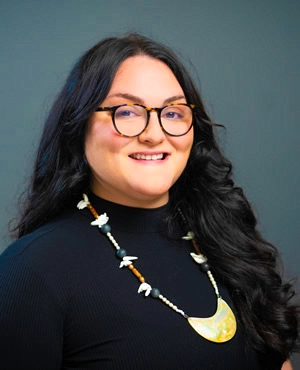 Annalise Guthrie
Cherokee Nation
University of Kansas
PhD – Ecology and Evolutionary Biology
Annalise Guthrie is a doctoral candidate and NSF GRFP Fellow at the University of Kansas, specializing in Ecology and Evolutionary Biology under the mentorship of Dr. Sharon Billings. She holds a Bachelor of Science in Environmental Science from Haskell Indian Nations University, where she graduated magna cum laude. Annalise has extensive research experience, including her role as a Graduate Research Assistant at the Kansas Biological Survey and Center for Ecological Research, and has organized sessions on Indigenous perspectives on soil and food systems. Her work focuses on advancing Indigenous people in STEM, leveraging databases, and mentoring undergraduate researchers. Annalise has received numerous awards and scholarships, including the NSF GRFP Research Fellowship and the Native Forward Award, and has contributed to several publications and presentations in her field. She has been an active panelist and speaker at various conferences, discussing topics such as soil structure changes, traditional ecological knowledge, and the transition from an Environmental Science degree to a PhD.
Annalise’s dissertation investigates the Critical Zone (CZ), the area from groundwater to the top of the tree canopy, where life is sustained through complex biogeochemical feedbacks linked to the water cycle. Central to these processes is soil, which acts as a reactive interface among the atmosphere, biosphere, hydrosphere, and lithosphere, storing and transporting water within the vadose zone. The dissertation examines how land use changes (LUC) impact deep soil structure and water availability, modify soil water solute concentrations and weathering rates, and assess how microtopographical soil moisture variability affects forest productivity across climates.
Chapter 1 explores the effects of LUC on deep soil structure, focusing on the loss and regeneration of deep roots and their role in forming soil structure. Chapter 2 investigates how climatic and soil structural attributes influence soil moisture residence time, driving solute release and flow across LUC and precipitation regimes. Chapter 3 examines the importance of microtopographical features for forest productivity, highlighting how landscape position mediates water and energy flows, impacting forest growth and resilience to climate change. The research aims to provide insights into soil structure changes, solute transport, and forest productivity, contributing to a better understanding of CZ functioning in changing environmental conditions.
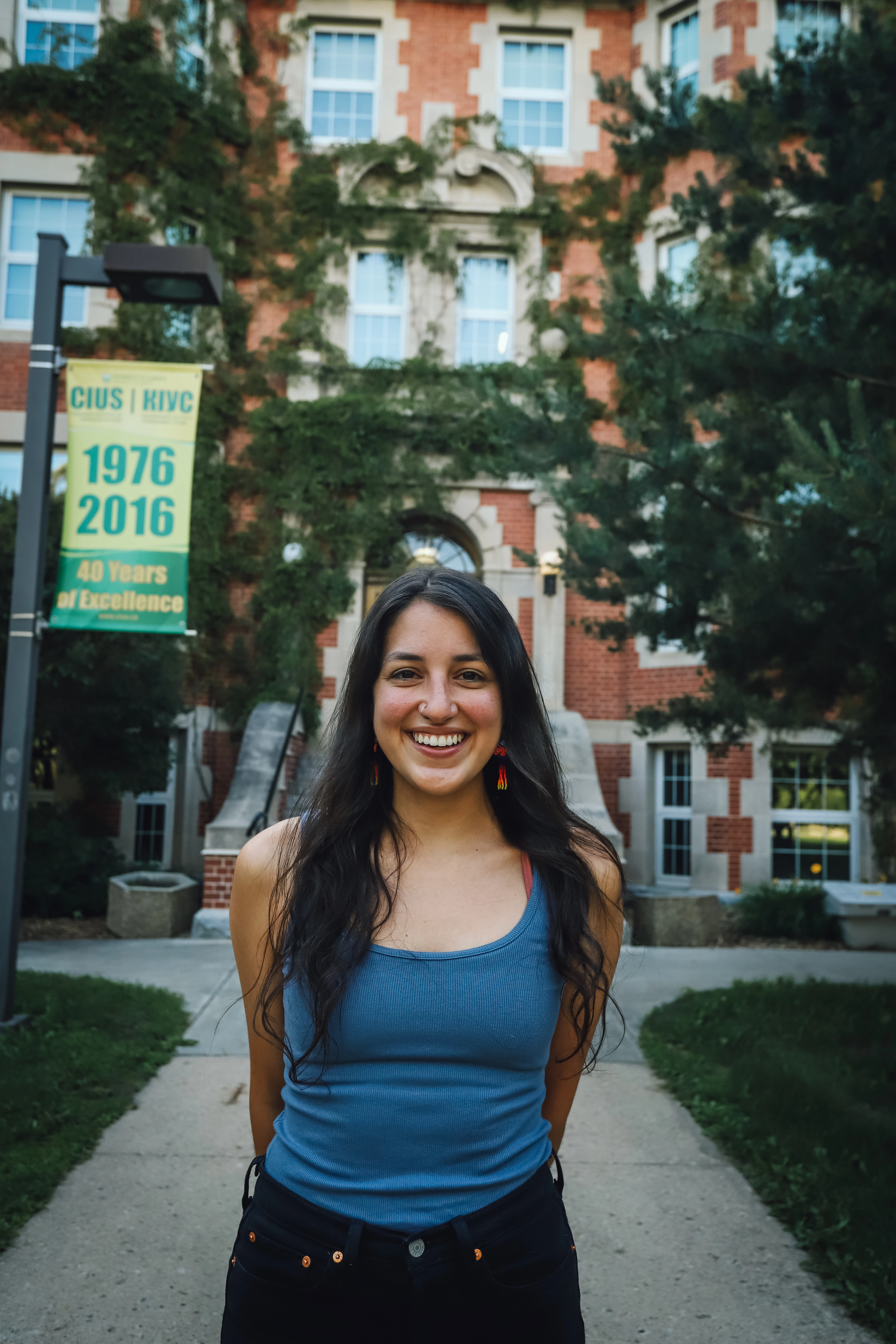 Cheynne Reuben-Thomas
Oneida Nation of Indians
Cornell University
PhD – Ecology and Evolutionary Biology
Cheyenne I. Reuben-Thomas is a doctoral student in Ecology and Evolutionary Biology at Cornell University, specializing in population genetics, environmental adaptation, biodiversity conservation, and Traditional Ecological Knowledge (TEK). A member of the Oneida Nation of Wisconsin and Tonawanda Seneca, Cheyenne integrates Indigenous perspectives into their research, focusing on the impacts of cultural fire practices and Indigenous-led land management on insect biodiversity and genetic variation. Their academic journey includes a Master’s degree in Ecology, Evolution, Genetics, and Genomics from the University of Rochester and a Bachelor’s degree in Integrative Biology from SUNY Buffalo State. Cheyenne is deeply committed to advancing Indigenous Data Sovereignty and applying a Land Back framework to ecological research. They are an active mentor, educator, and advocate for Native youth in STEM, contributing to numerous workshops, panels, and outreach programs. Their work has earned prestigious fellowships, grants, and recognition for contributions to science and Indigenous communities.
Reuben-Thomas, also known by their Oneida name Kanyʌhtowa•nʌ, meaning “Big Snow”, investigates how Indigenous-led burns (Cultural Fire) and agency-led prescribed burns differ in their methods and effects on insect populations. Their research aims to demonstrate that Cultural Fire practices, which emphasize soil health and habitat restoration, may enhance genetic diversity and overall biodiversity of ants compared to conventional prescribed burns.
Cheyenne's summer research will involve collecting ant species from areas subjected to burns in California and Wisconsin, collaborating with Indigenous tribes and state/federal agencies. They will perform DNA extractions and whole genome sequencing to analyze genetic diversity and adaptation to fire. Their broader goal is to advocate for policy changes that restore Indigenous land rights and ensure respect for Indigenous knowledge and data in ecological research. Through their work, they aim to highlight the importance of Indigenous-led conservation and land management strategies.
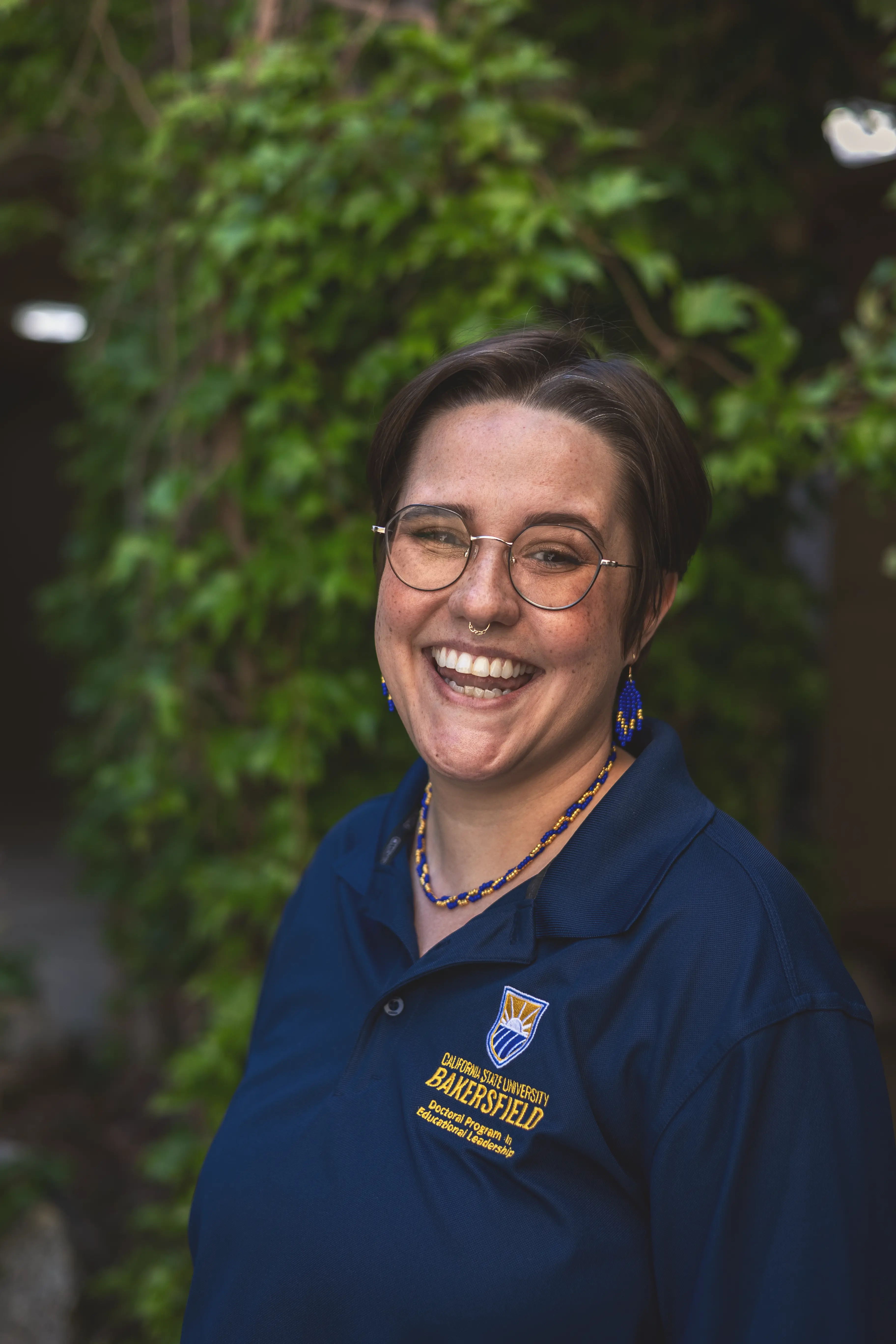 Olivia Garrison
Cherokee Nation
California State University Bakersfield
PhD – Educational Leadership and Administration
Olivia "Olive" Garrison is a dedicated educator and doctoral student in Educational Leadership at California State University, Bakersfield. They hold a Master's degree in History and a Bachelor's degree in Political Science from San Francisco State University. Olive specializes in Social Studies and employs inquiry-based teaching strategies to help students understand the diverse world around them. They have extensive experience as a Social Studies teacher at Del Oro High School and Independence High School, and as an adjunct professor at Bakersfield College. Olive is actively involved in curriculum development and leadership within the Kern High School District. Their commitment to advancing Indigenous Data Sovereignty and applying a Land Back framework to ecological research is evident in their work. Olive has received numerous awards for their contributions to education and LGBTQ+ advocacy, including the Rainbow Campus Champion Award and the Human Rights Award for LGBTQ+ Advocacy. They are a passionate mentor and advocate for Native youth in STEM, contributing to various workshops, panels, and outreach programs.
Olive’s dissertation explores the personal and professional experiences of LGBTQ+ educators amidst increasing anti-queer moral panic in the United States, particularly focusing on California. With 574 proposed bills targeting LGBTQ+ individuals in 2024, including 223 aimed at education, this hostile climate poses significant challenges for LGBTQ+ educators and students. Olive's research aims to uplift LGBTQ+ educators' voices, enriching understanding of their experiences within educational settings and developing practical recommendations for equitable treatment of educators and students.
Using narrative and storytelling analysis frameworks informed by Clandinin and Kim’s work, Olive will identify key themes such as resilience, systemic discrimination, and community impact. They will conduct semi-structured interviews with a diverse sample of LGBTQ+ educators, including BIPOC voices, to ensure comprehensive representation. The research will be supported by the Cobell Scholarship Foundation, enabling access to high-quality recording equipment, transcription software, and travel expenses for in-person interviews. This study aims to contribute significantly to scholarship and practice by illuminating the challenges faced by LGBTQ+ educators and advocating for policy changes to foster inclusive and supportive school climates.
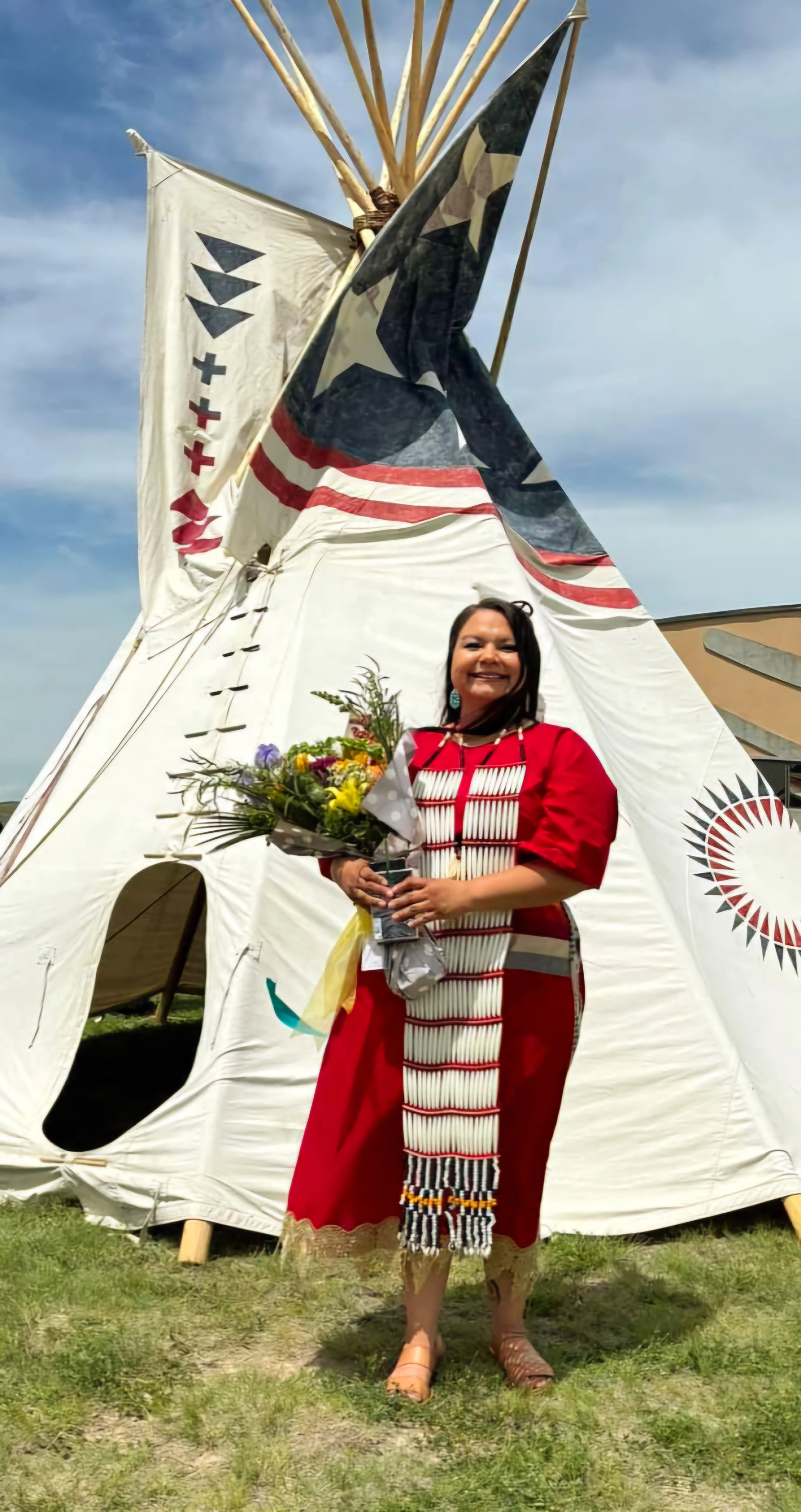 Summer Afraid of Hawk
Cheyenne River Sioux
Salish Kootenai College
MA,MS – Natural Resources and Conservation
Summer Afraid Of Hawk is a graduate student at Salish Kootenai College, pursuing her M.S. in Natural Resources Management. She holds a B.S. in Natural Science with an emphasis in Conservation Biology from Oglala Lakota College and an Associate of Arts in Native Environmental Science from Northwest Indian College. Her research experience includes studying deep artesian wells on the Cheyenne River Sioux Reservation and investigating hypoxia in Bellingham Bay. Summer has also contributed to buffalo conservation efforts through internships and professional roles, notably securing significant grants for Tribal buffalo restoration projects. Her expertise spans GIS, fieldwork, drone technology, and interdisciplinary collaboration, making her a valuable asset in ecological and cultural restoration initiatives.
Her master's thesis research proposal focuses on rangeland restoration through the use of GIS and Remote Sensing to assess and map vegetation and culturally significant plant recovery following the reintroduction of bison. She emphasizes the profound cultural and spiritual connection between the Lakota people and bison, highlighting the historical significance and the ecological role of bison as keystone species. Her research aims to fill the knowledge gap regarding restoration outcomes on Tribal lands, specifically within the Cheyenne River Sioux reservation, where bison reintroduction is managed by the Tribe's buffalo program.
She plans to incorporate Indigenous Research Methodologies and Traditional Ecological Knowledge (TEK) into her study, utilizing field-based data collection methods such as vegetation sampling, soil health analysis, and GIS mapping. Her expected outcomes include demonstrating how bison grazing promotes vegetation recovery, including culturally significant plants, and providing foundational data for future research on carbon sequestration through bison grazing. Her work aims to support Tribally led bison restoration efforts and contribute to the broader movement of LAND BACK, ensuring the continuation of cultural practices and ecological balance for future generations.
About Cobell Scholarship Program, Indigenous Education, Inc.
Created in 2016 for the express purpose to administer the Cobell Scholarship Program, Indigenous Education, Inc. provides elevated opportunities for Native college students through empowering them with an impactful scholarship experience designed to support their success in higher education. The overarching mission and vision of Indigenous Education, Inc. is to support American Indian and Alaska Native student success. Since the program’s beginning, it has supported over 6,000 students with more than $50,000,000 in scholarships. To learn more about IEI and the Cobell Scholarship, visit cobellscholar.org.